
Waste Minimization
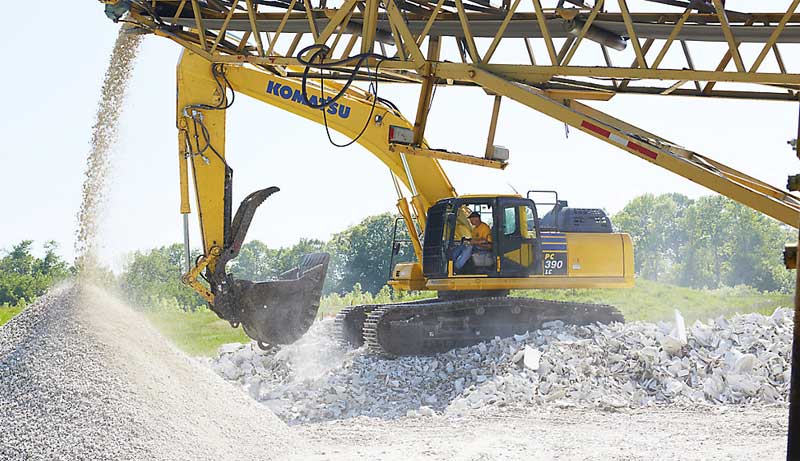
- I can help your company reduce the amount of waste and the amount of material sent for landfill disposal. This is from (a) large scale industrial waste recycling programs, (b) employee engagement programs and (c) landfill waste-diversion projects.
- Led company waste minimization efforts from 1995 (landfill diversion rate near zero) to 2008 (landfill diversion rate over 50%). After 2008, I moved into a different role and others worked to continue to advance waste minimization.
Several Kohler Co. customers requested that EcoVadis evaluate Kohler Co. ESG performance. I managed the collection and reporting of ESG information to EcoVadis. In 2023, we increased the EcoVadis score from the 40th percentile to a Silver Medal (76th percentile).
We ask for explanations for the biggest changes in operational footprint.
Often we find the change is
normal – the production level or product mixture changed, a machine failed and needed to be fixed, product sales went up or down with associated
changes in manufacturing efficiency, etc. But sometimes we find that the data change was a short term error that could be easily remedied. Our policy is to be able to explain the reasons for 80% of the change in environmental footprint.
We look for similar operations
so we can compare performance internally. How can one plant use 1 liter of water to
make a widget when another plant needs 6 liters of water per widget? Once we are
assured the data is correct,
we know where to look for future reduction opportunities.
We look for missing data. Most
organizations will have a list of all business properties for insurance purposes. We make sure that we either have (a) utility bills for all locations or (b) that we confirm there are no company paid invoices and (c) estimate any missing utility bills.
- When I started on beneficial reuse in 1995, the company headquarters landfill was a few months from full capacity. Initial waste minimization efforts focused on extending the life of the landfill. The original landfill was slated to reach capacity in 1996, the landfill was finally closed in 2021. The extension of useful life was due to landfill waste minimization success.
- Member of the Technical Advisory Committee for Natural Resource rule number 538, the Wisconsin beneficial reuse rule. This committee negotiated rules to allow the safe recycling of high-volume industrial waste in construction projects. The rule and supporting environmental analysis were used in other states that did not have a structured rule-making process.
- Negotiated many beneficial reuse projects, including three projects in the 50,000-ton size range. One was a highway overpass construction project, one was a retail store construction project and the third was a renewal of an urban sand quarry.
- Collaborated on the elimination of office desk trash containers. This forced office workers to move trash and recyclable materials to collection containers to become more aware of the waste they generated. This practice was adopted from other leading companies as a way to spread the zero landfill mindset.
- Shared best practices in quarterly sustainable newsletters, internal websites and frequent regional EHS summits for manufacturing operations.